
 English

 |


| Quantity: | |
|---|---|
1060, 1070 alloys
Green House Aluminum
76061199
Description of Mirror Aluminum Sheets:
Aluminum sheets with a mirror finish feature an ultra-smooth, highly reflective surface that delivers superior light reflectivity. This quality makes them ideal for applications demanding enhanced visibility and aesthetic appeal. As a versatile material, they are widely utilized in interior design, architectural detailing, signage production, automotive trim, and numerous other fields where both practical performance and visual impact are critical requirements.
Why mirror aluminum coil sheets with anodized?

Green House can provide aluminium mirror sheet anodized polished and mill finishing polished,
The anodized polised mirror sheets which with higher strength and free from oil stain, dent, inclusion, scratches, oxide dicoloration, breaks, corrosion, roll marks.
| Model | 870 | T80 | T80-2 |
| AL (%) | 99.85 | 99.85 | 99.85 |
| T.S (N/mm2) | 145-155 | 145-155 | 145-155 |
| Y.S (N/mm2) | 130-140 | 130-140 | 130-140 |
| Elongation (%) | ≥2 | ≥2 | ≥2 |
| Total Reflectance (%) | 86 | 86 | 86 |
| Iridescence | No | Low | Low |
| Description of finish | Mirror Reflection | Mirror Reflection | Mirror Reflection |
High Reflectivity: Its reflectivity ranges from 86% to 95%, making it ideal for scenarios requiring high-brightness reflection, such as lighting reflectors and solar heat-collecting reflective materials.
Strong Weather Resistance: It can resist intense ultraviolet rays, maintain color stability for an extended period, and boasts a long service life.
Excellent Self-Cleaning Performance: It is oil-repellent, water-repellent, and anti-pollution, allowing for easy cleaning.
Superior Processability: It has a uniform coating and rich color options. Through surface treatment processes like spraying and anodization, it can achieve various colors and textures to meet diverse design requirements.
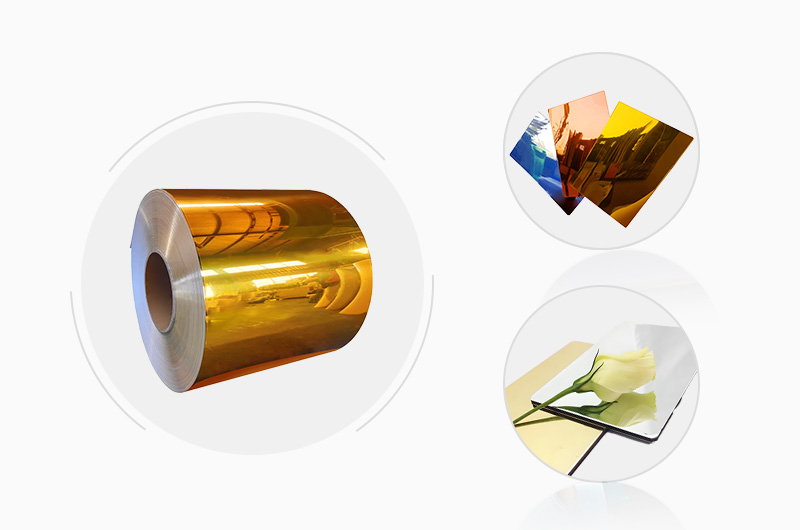
Advantages of Anodized Mirror Aluminum Coil Sheets
1.Top-grade quality, refined and luxurious outlook, sparkling surface
2.Greatly reduce the surface treatment process, improve conformity rate, thus effectively reduce cost
3.Lower proportion, only 1/3 of stainless steel
4.Environmental, toxic- free, fire prevention
5.Anti-interference, electromagnetic wave shielding, and excellent heat dissipation performance
6.Easy to clean, anti-statically, resist finger print
7.Able to be molded and bent part is broken-free
How to test the anodized mirror aluminum sheets?
There are two ways we usually follow to test the anodized mirror aluminum sheets:
Simple Quality Tests
Fingerprint Test: For imported anodized mirror aluminum, lightly touch the surface. While fingerprints may appear, they can be easily wiped away with a dry cloth without leaving any residue or stain. On domestic mirror aluminum, fingerprints tend to smudge and are difficult to remove completely, often permanently marring the mirror finish.
Bend Test: Gently bend a small sample near your ear. Imported anodized aluminum will produce a slight crackling sound due to its durable oxide layer (similar to corundum) fracturing under stress. Domestic polished aluminum typically will not make this sound.
The anodized mirror aluminum sheets was widely used in lighting reflectors and solar collectors due to its high reflectivity. In the field of decoration, it is used for interior and exterior wall decoration, furniture, and electronic product casings. It is also commonly seen in signs, jewelry boxes, and cosmetic packaging due to its beautiful appearance.

Surface Film: Each sheet must be covered with a peelable protective film (usually PE or PVC material). Requirements:
Thickness: 0.03-0.05mm (sufficient to resist minor scratches).
Adhesion: Moderate (easy to peel off without leaving residue on the mirror surface).
Function: Anti-fingerprint, anti-dust, and anti-scratch; for anodized mirror sheets, it also prevents temporary oxidation from moisture.
Edge Protection: Use corrugated paper strips, foam sleeves, or plastic edge guards to wrap all four edges of the sheet. Purpose: Avoid edge collisions (which may cause edge chipping or surface cracks).


